Paço do Arcos’ own Parque dos Poetas is an enormous open-air tribute to Portuguese-language poetry. This is more than a park with some statues — this is a carefully choreographed landscape in which art, architecture, and nature work together to create something that feels like a series of little worlds inside one big green space.
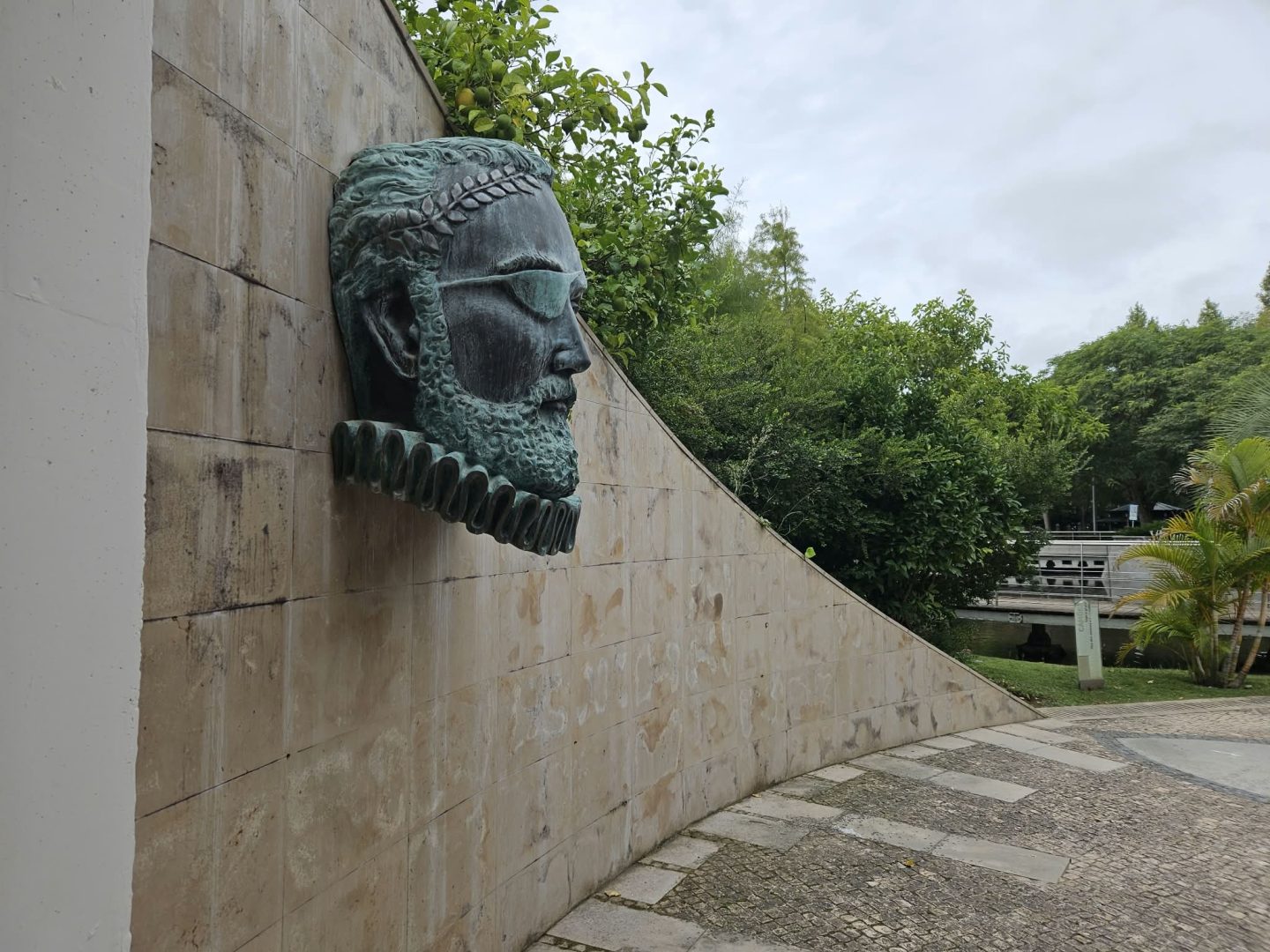
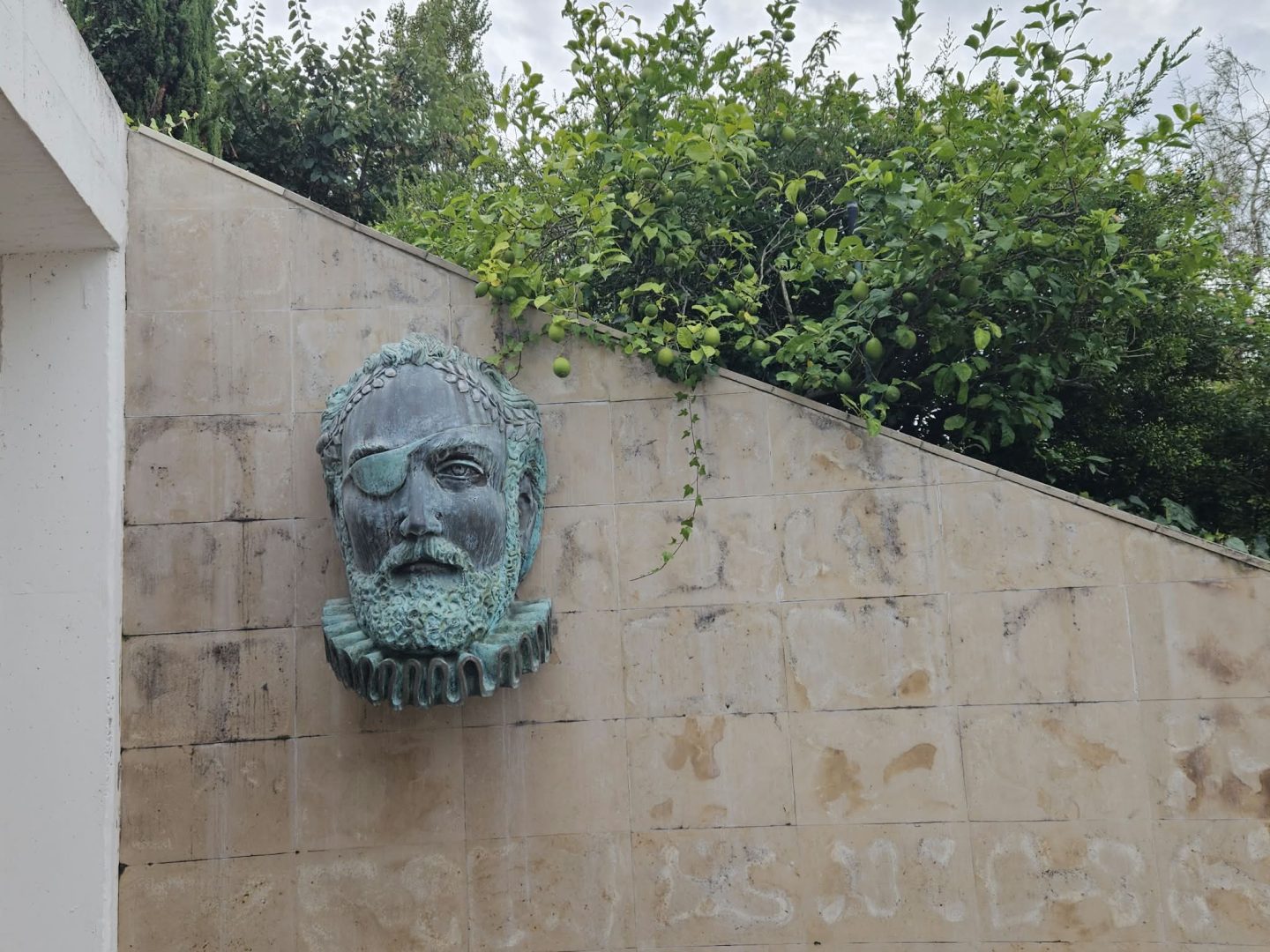
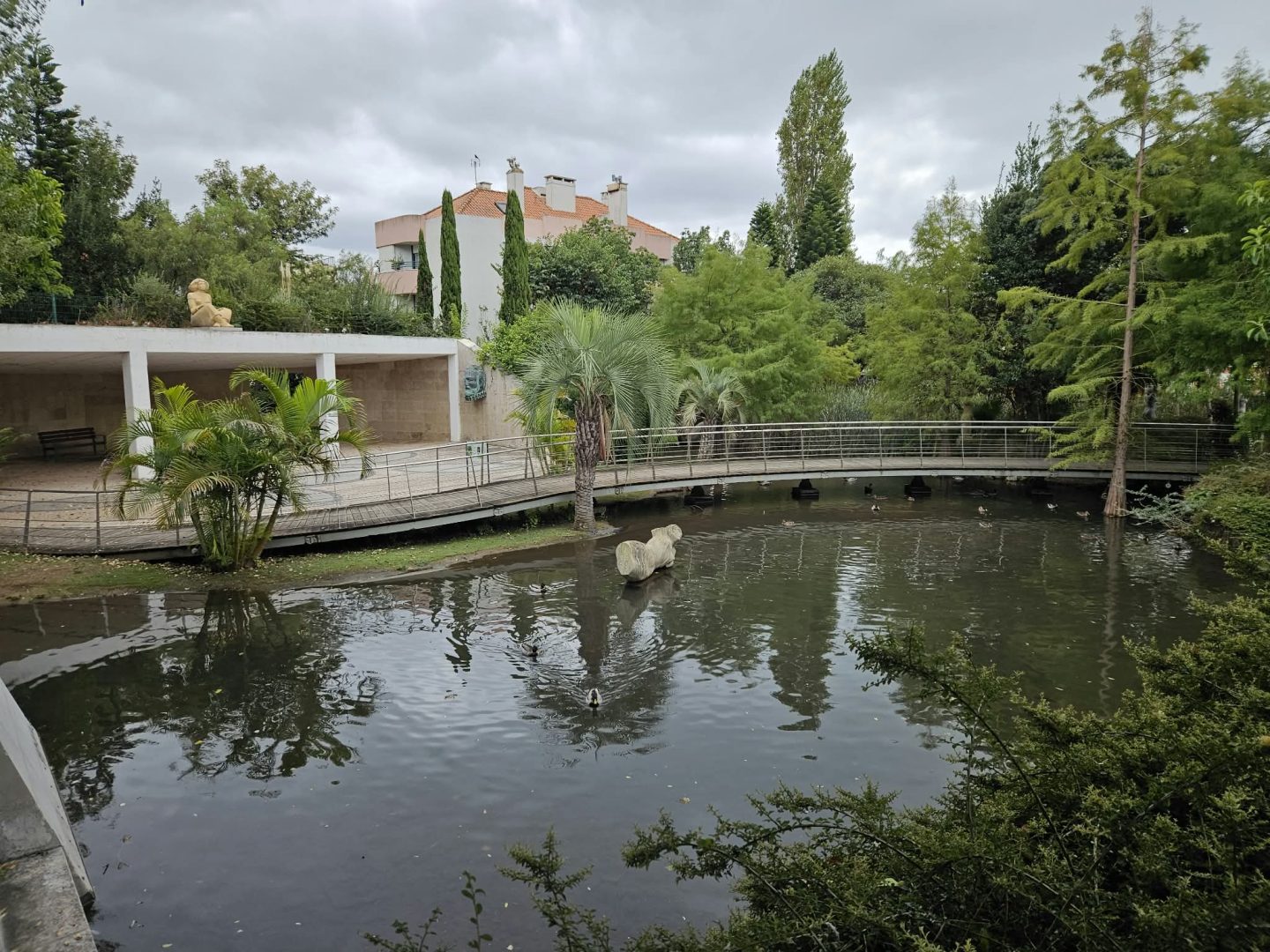
At the entrance to the park, the iron head of Luís de Camões hangs above a duck-filled pond, keeping watch over the landscape beyond. It’s a suitably dramatic welcome from the man who gave Portugal its great epic poem, Os Lusíadas, chronicling voyages into unfamiliar waters and adventures beyond the edge of the known world.
Arms and the Heroes, who from Lisbon’s shore,
Through Seas where sail was never spread before,
Beyond where Ceylon lifts her spicy breast,
And waves her woods above the watery waste,
With prowess more than human forced their way
To the fair kingdoms of the rising day:
What wars they waged, what seas, what dangers past,
What glorious empire crowned their toils at last
-Luís de Camões, Os Lusíadas (translated by William Julius Mickle, 1776)
You could hardly ask for a better introduction to what lies ahead.
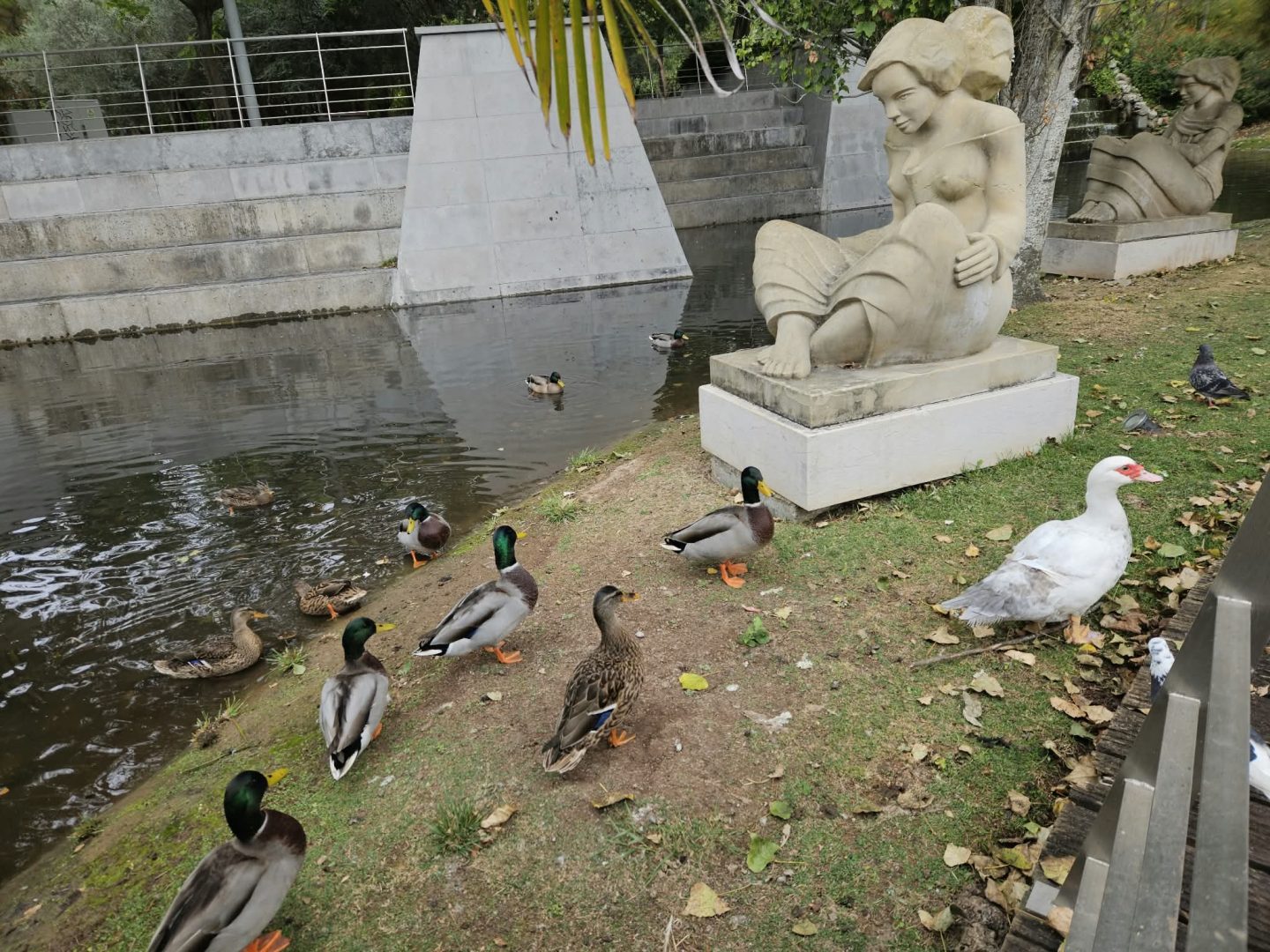
Atlas arrived expecting a pleasant walk and somewhere to let the kids run about. Instead, we stumbled into a sprawling landscape of sculptures, gardens, bridges, babbling brooks, and winding pathways, where every turn seemed to reveal another micro-world. We left with a head full of questions about the poets, the artists, and the people who imagined this extraordinary place in the first place.
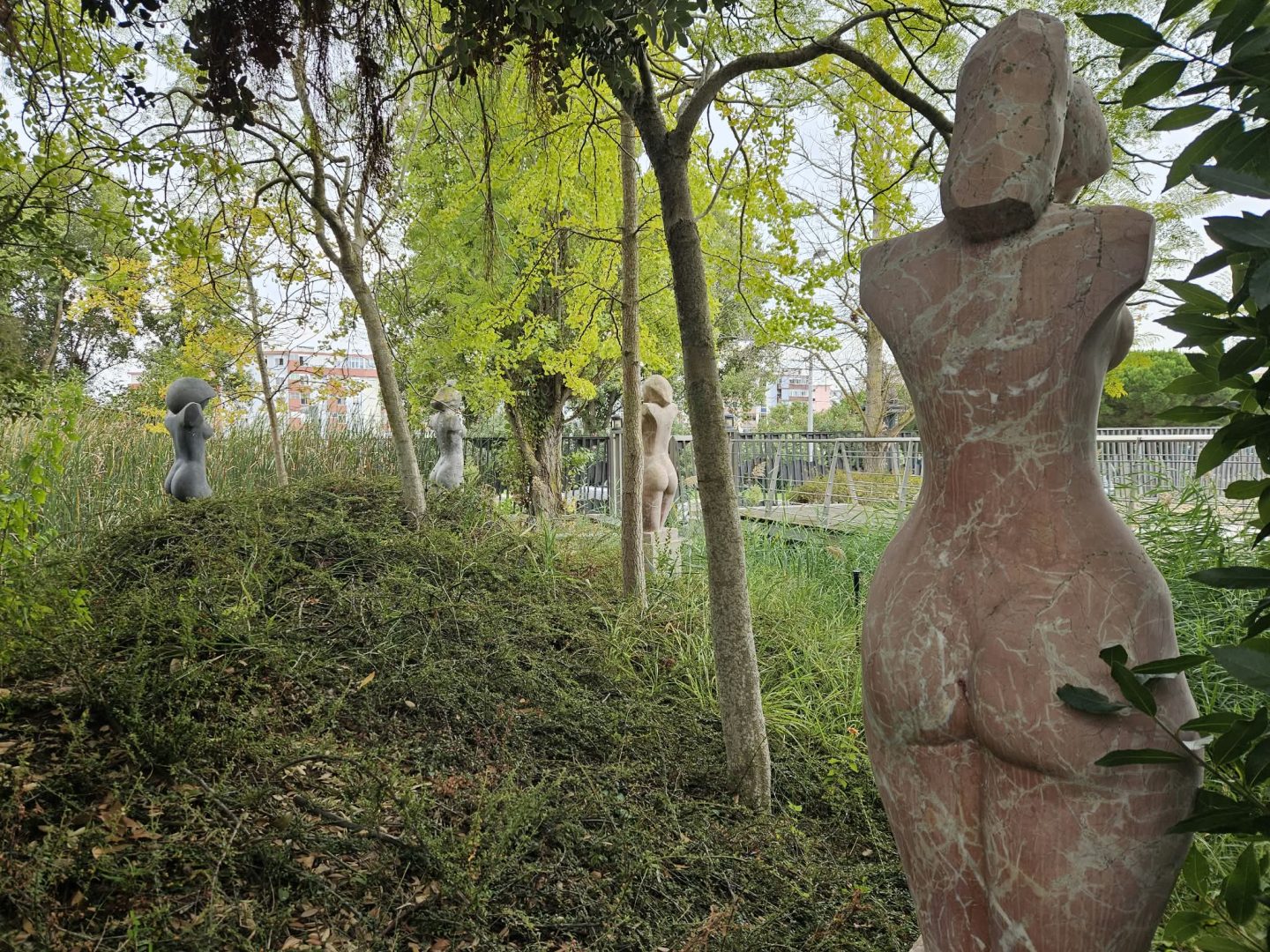
A poet in every nook
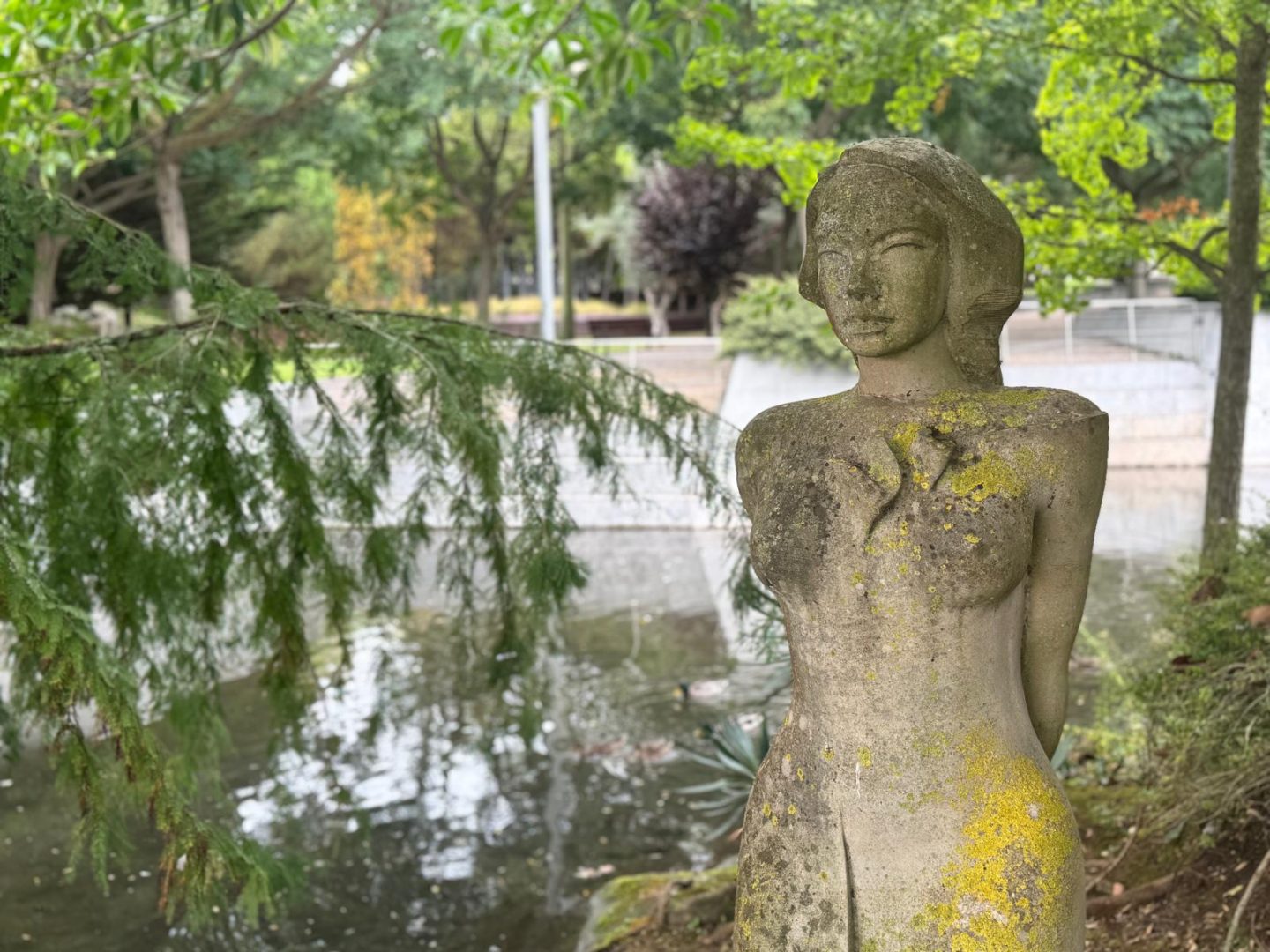
The park celebrates 60 poets from Portugal and across the Portuguese-speaking world, represented by sculptures created by more than 40 artists. The project was conceived as a meeting point between literature, sculpture, and landscape, and you can feel that ambition in every corner.
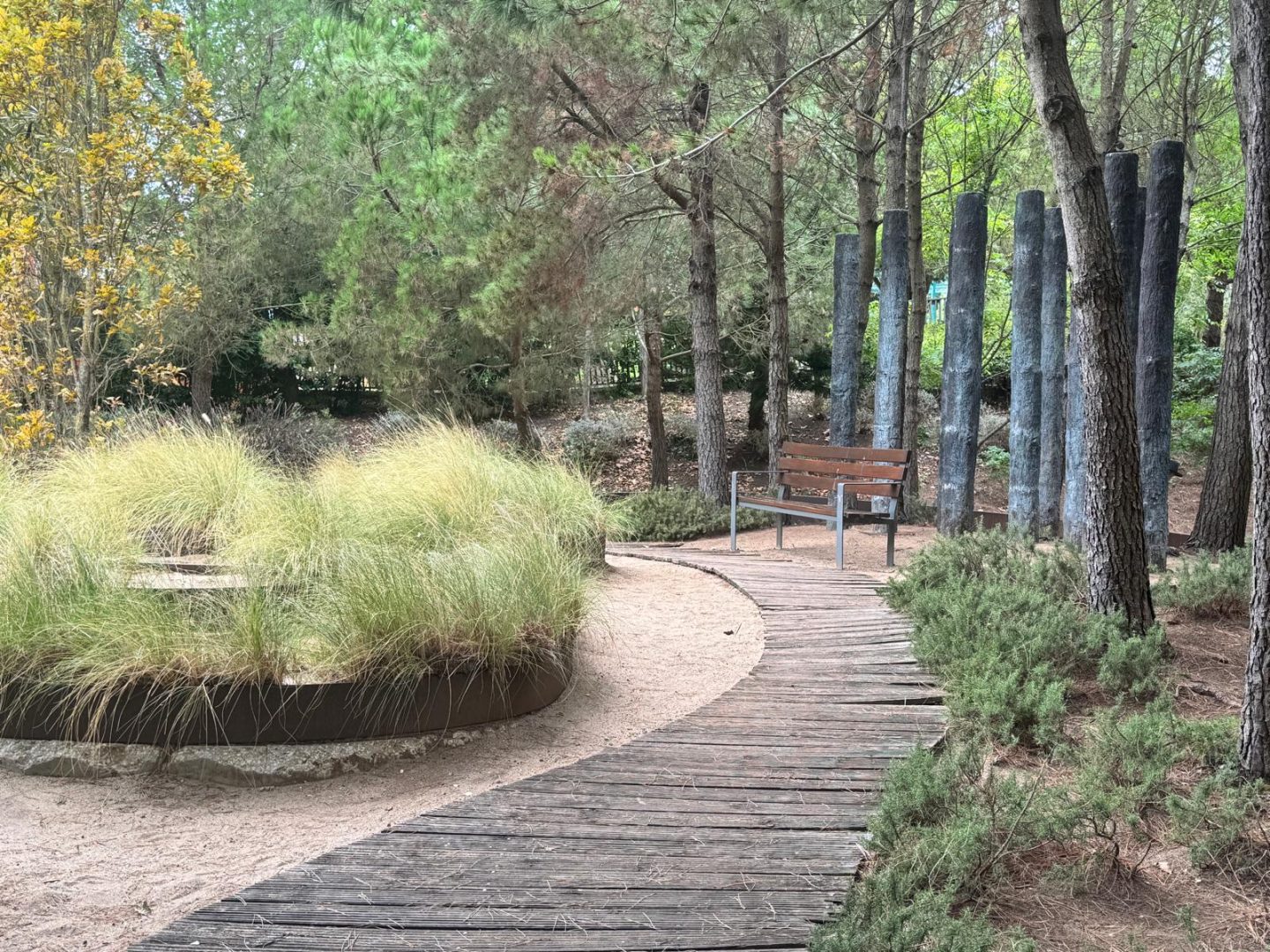
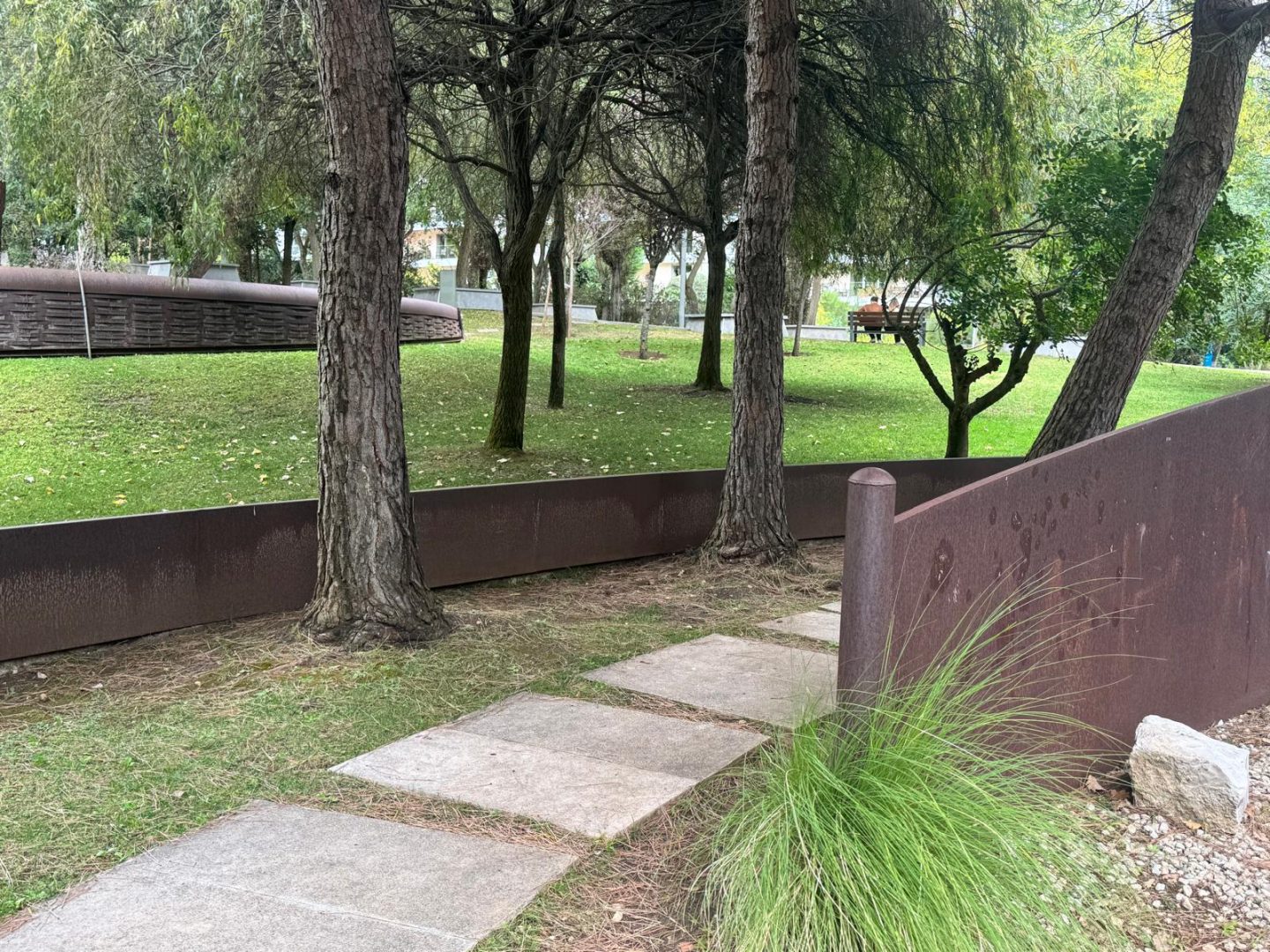
Each poet has their own space, usually featuring a sculpture amid a thoughtful arrangement of natural stone, wood, metal, and imaginative landscaping. There might be a bench tucked into the shade, a pomegranate tree, a water feature, a bridge, or a walkway leading you somewhere unexpected. No two spaces are alike. Styles vary, aesthetics shift, and tones soften or harden, yet somehow everything fits together seamlessly.
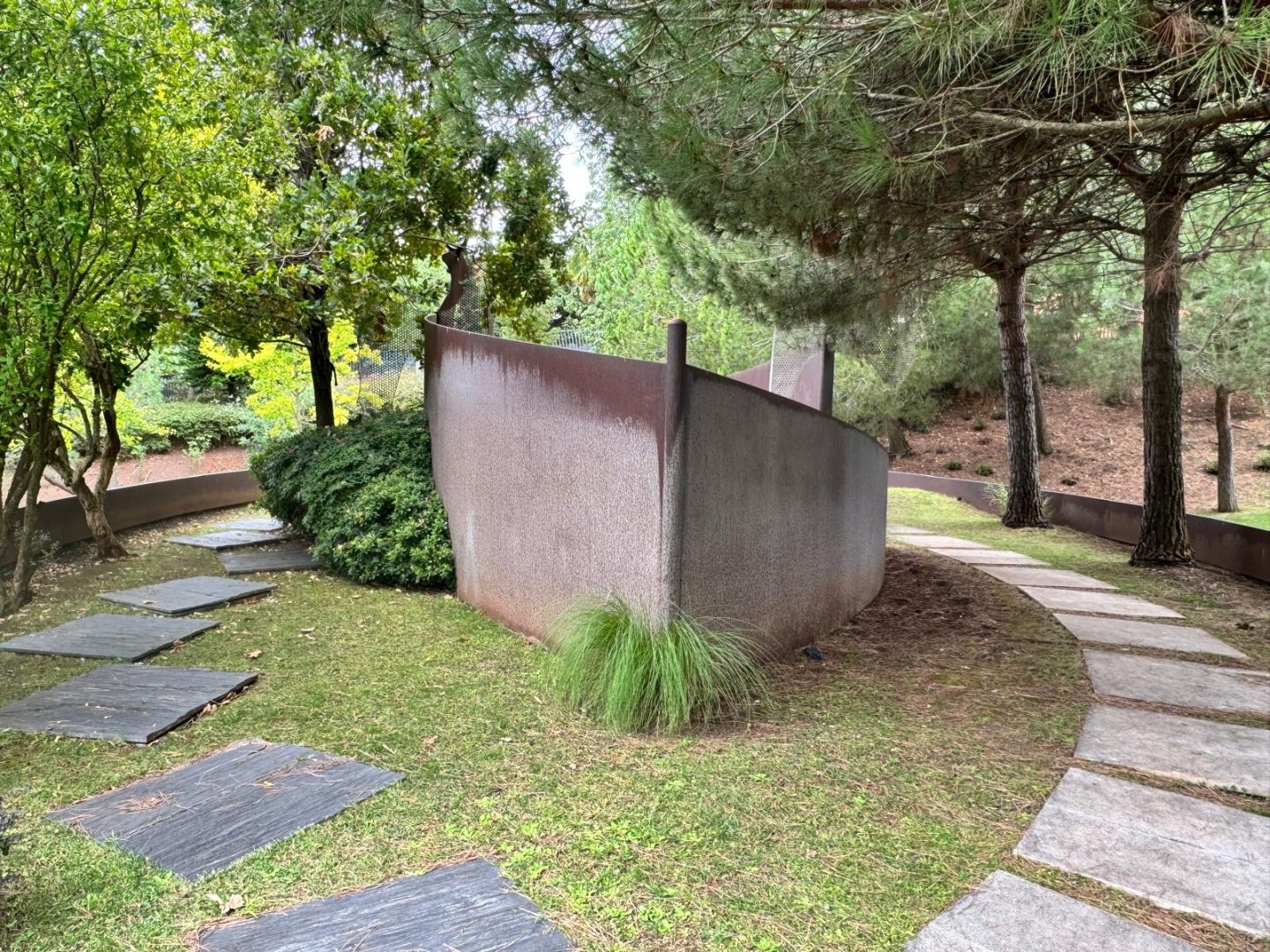
The different nooks are separated by rolling hillocks, wooded clusters, rock piles, stone walls, bridges, and little streams that burble away in the background. Rather than marching from one sculpture to the next, you find yourself wandering between them, discovering each new space almost by accident.
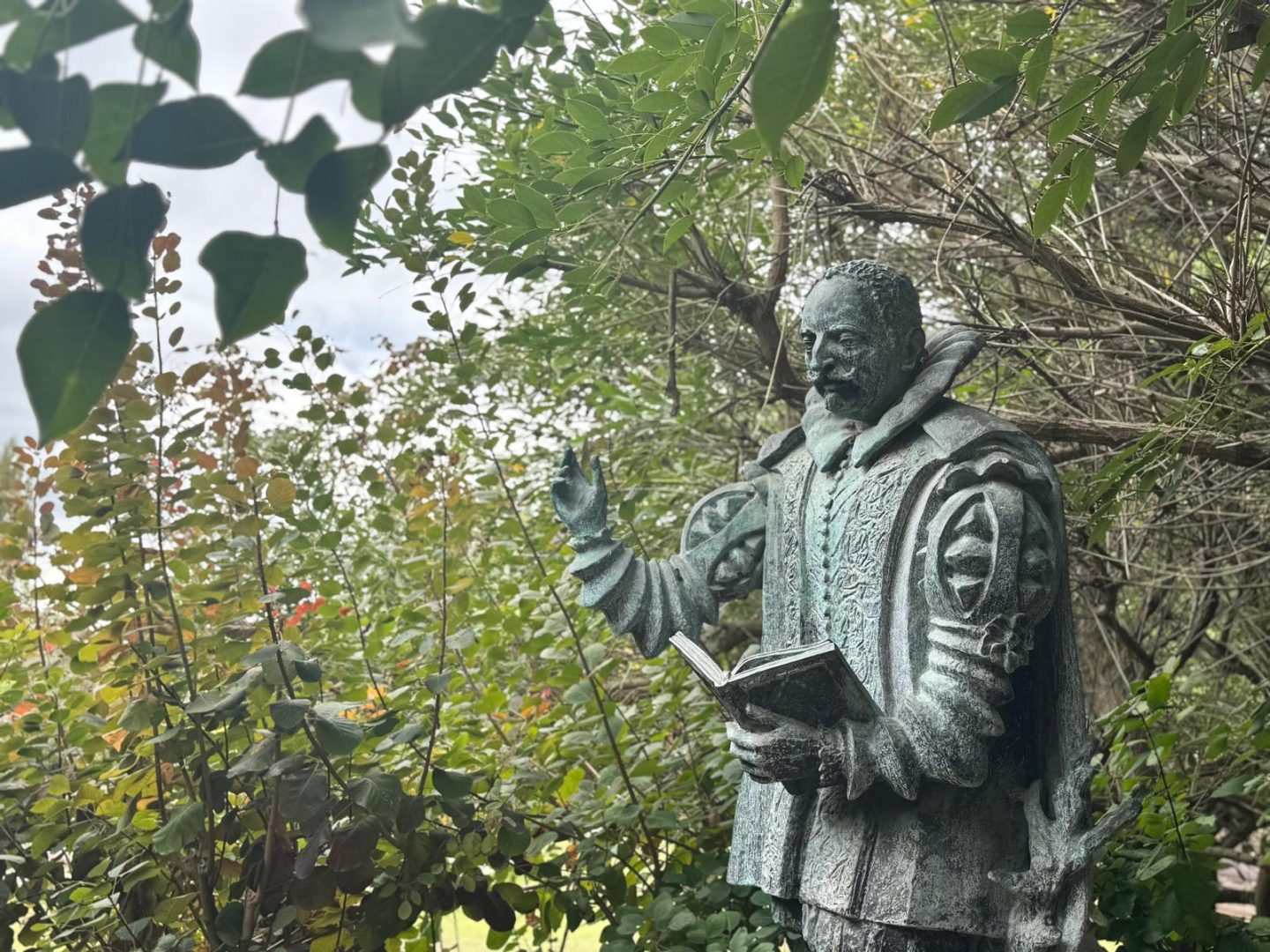
It’s a lovely way to encounter poetry, too. You don’t need to know your Camões from your Pessoa before you arrive. In fact, there’s something rather satisfying about coming across a carved figure and wondering who they were, what they wrote, and why the artist chose to represent them in this particular way.
Among the familiar names are Luís de Camões, Fernando Pessoa, Florbela Espanca, and Sophia de Mello Breyner Andresen. Along the central Alameda dos Poetas, lines of poetry are incorporated into the paving, so even the paths have something to say.
It’s the perfect place to celebrate the beauty of poetry in motion, without anyone needing to sit still in a classroom.
Bring the kids. Bring a book. Bring absolutely no rush.
At the southern entrance, you’ll find a kiosk beside a water feature made up of stepped terraces, with spigots that look tailor-made for summertime splashing. Shaded seating banks nearby offer a welcome retreat for grown-ups who prefer to supervise the merriment from a comfortable distance.
Elsewhere, winding pathways invite you to meander without much of a plan. There are quiet corners for couples looking for a space of their own, shaded benches for a breather, and enough twists, turns, and unexpected views to keep curious little explorers occupied.
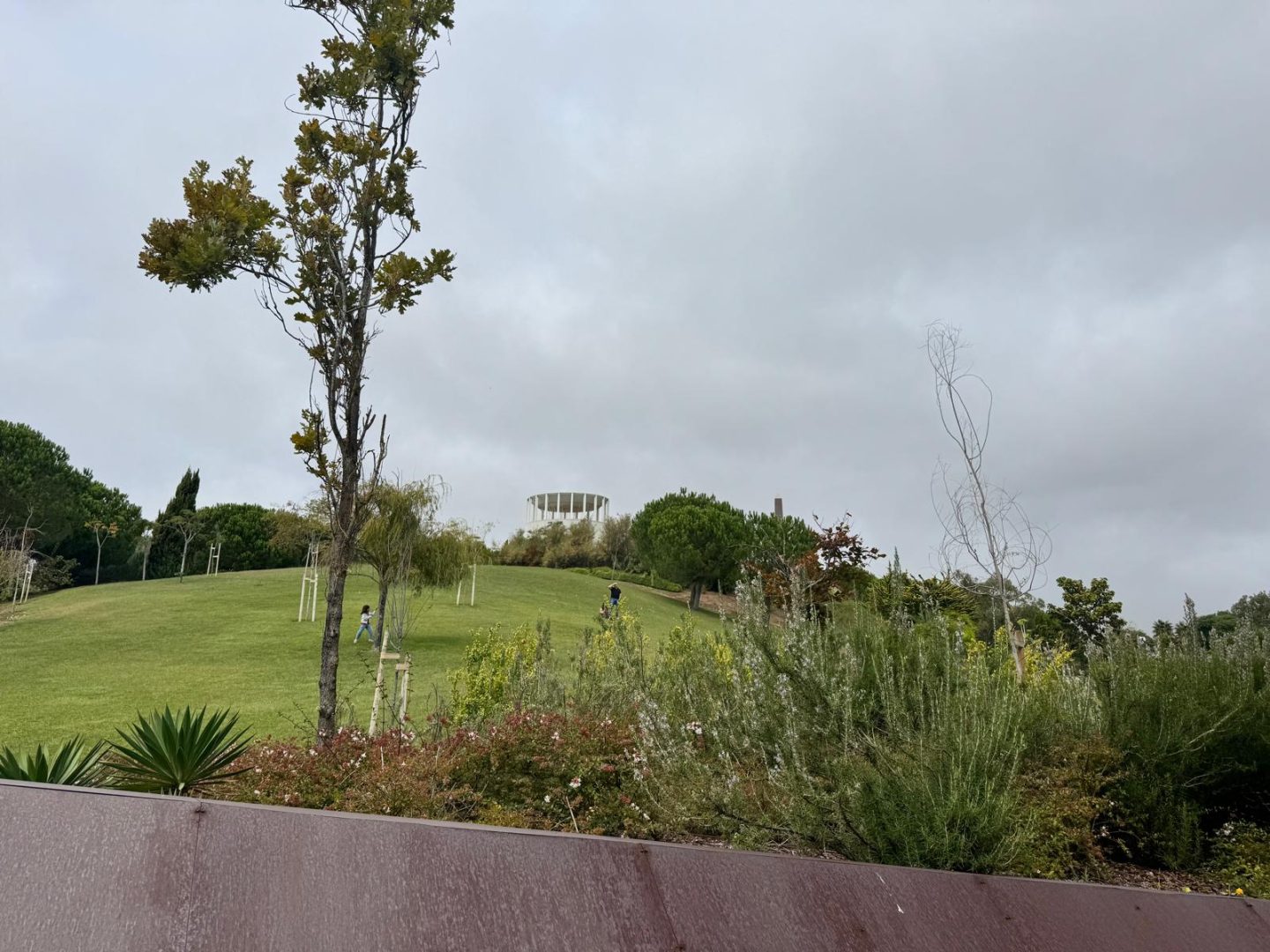
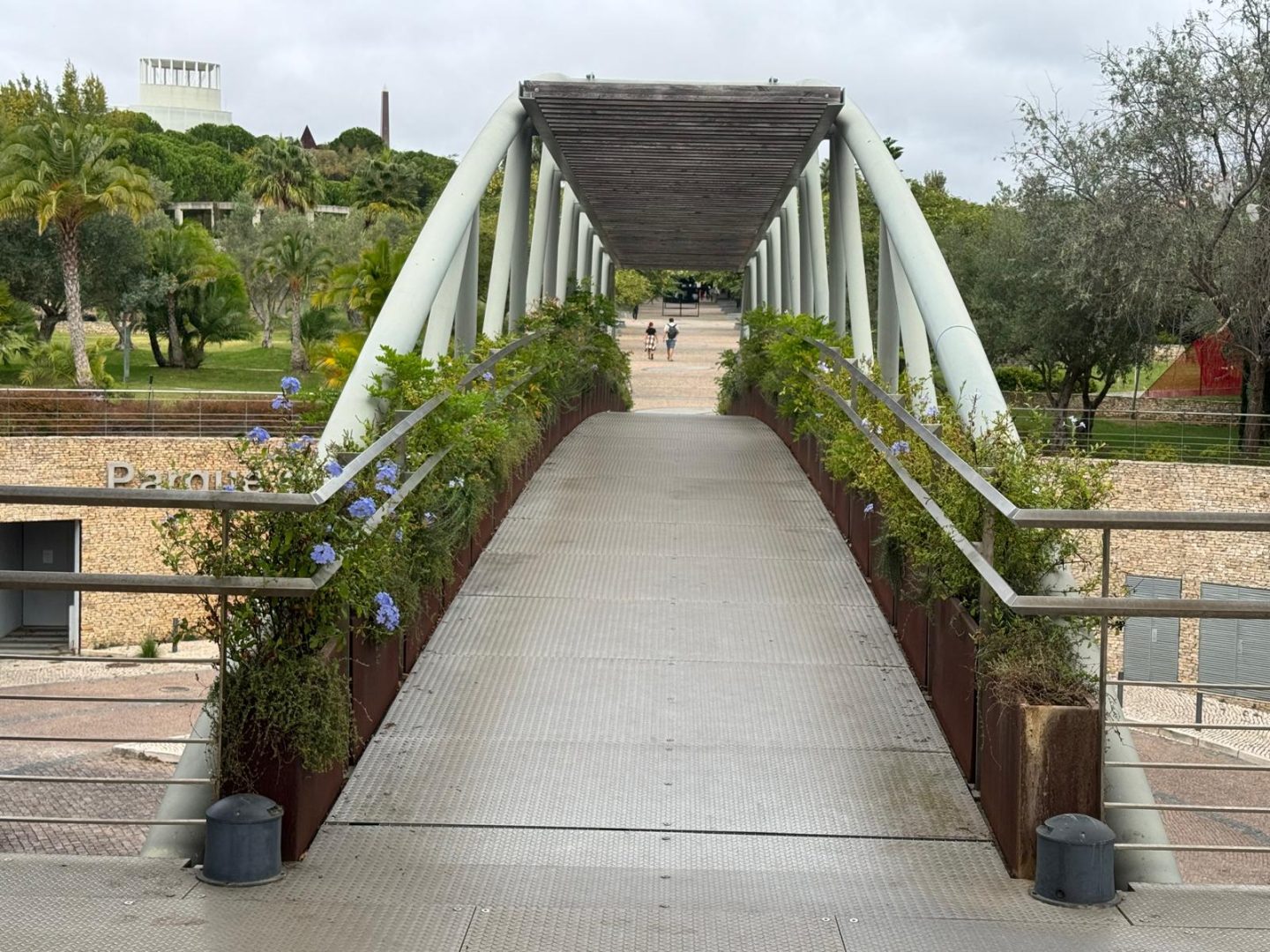
The landscape alternates between open spaces and enclosed green pockets, formal gardens and wilder-looking stretches, with bridges and water features adding to the sense of discovery. It’s a park that rewards slow wandering. Take your time, follow a path because it looks interesting, and see where you end up.
For families, that combination of room to roam and things to wonder about is a winning one. The kids can run about, while the adults get to indulge in the rather underrated pleasure of being somewhere beautiful without having to spend money to enjoy it.
A labyrinth, a viewpoint, and a temple to poetry
Make your way up towards the northern end of the park and you’ll find an obelisk bearing the names of the featured poets, alongside a striking triangular metal viewpoint surrounded by a literal labyrinth of hedges.
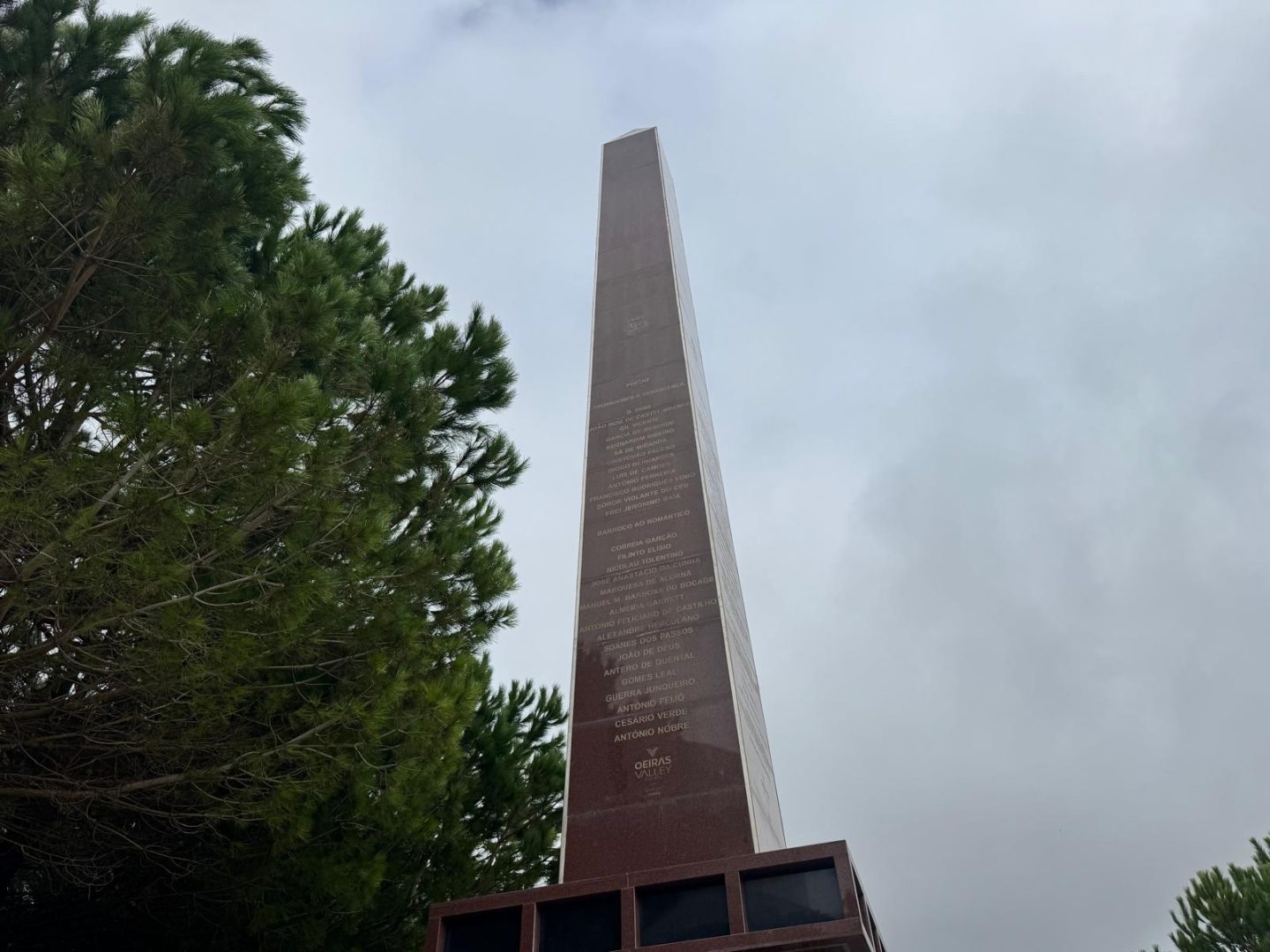
It’s a fitting spot to pause and take stock of the place, although the park has one more surprise up its sleeve: the Templo da Poesia.
This cultural centre hosts performances, literary events, slam poetry, and other cultural programming, making the park more than a collection of sculptures to admire in daylight. Check the program before visiting, as events can continue into the evening and provide another reason to return.
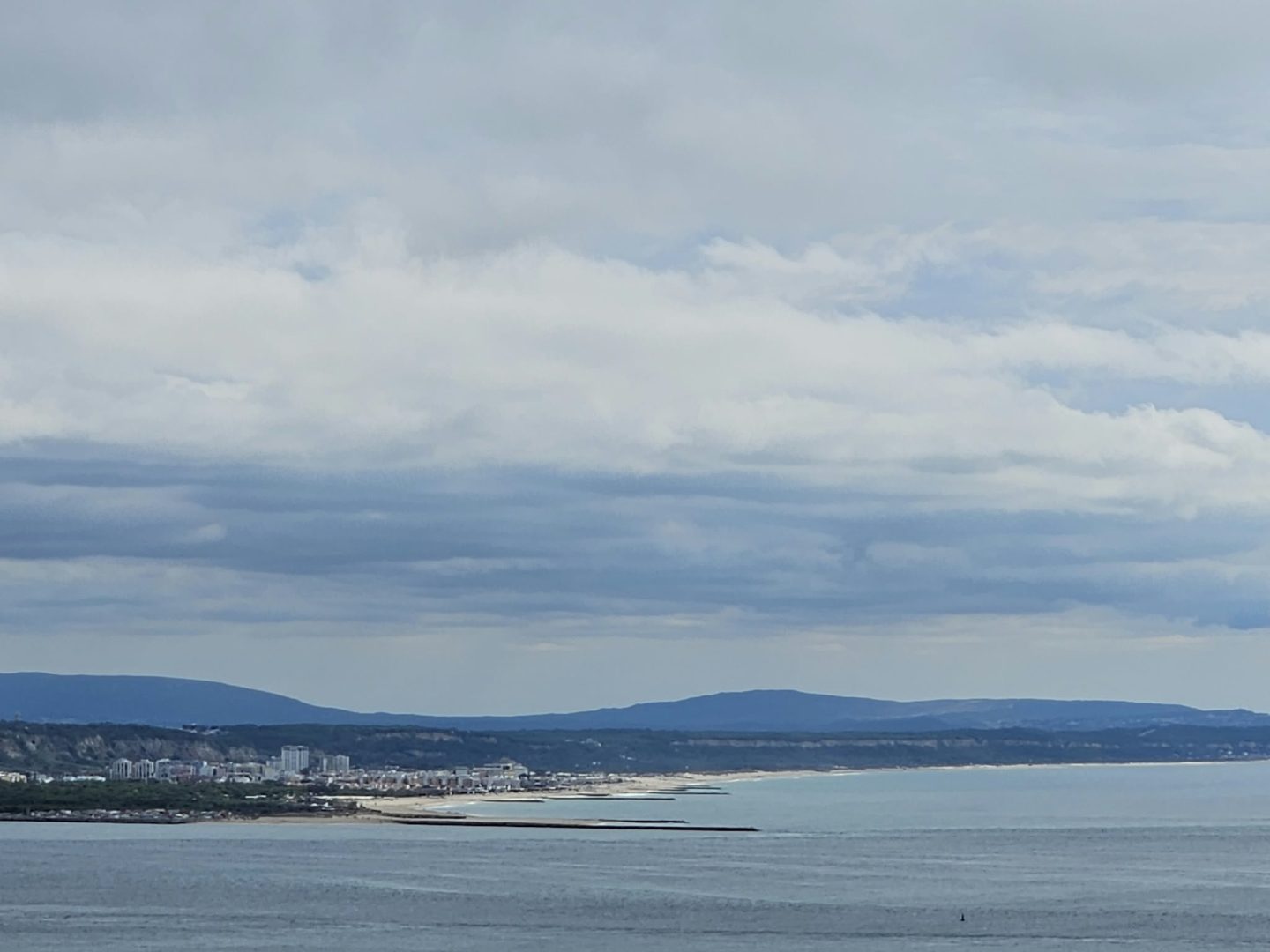
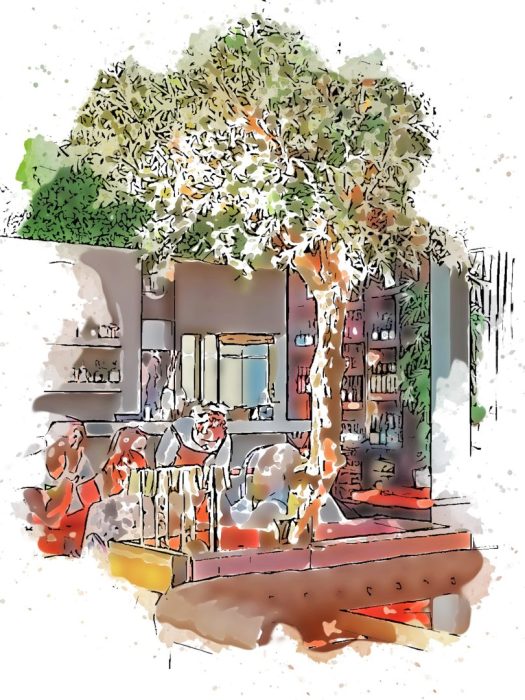
And if all that wandering has left you peckish, head upstairs to Verso Rooftop, the rooftop restaurant at the Templo da Poesia. With views across the surrounding landscape, a full bar, and a varied menu, it’s an excellent excuse to turn a walk into a longer outing. We certainly wouldn’t object to making a meal here part of the plan next time.
Getting there
Parque dos Poetas is in Oeiras, near Paço de Arcos, and makes an easy day trip from Lisbon. Take the Cascais train line to Paço de Arcos and allow around 15–20 minutes to walk uphill towards the park’s southern entrance. You can also approach from the northern side.
Entry to the park is free, and with so much ground to cover, comfortable shoes are a sensible idea. Bring water, or don’t, there are water fountains, allow more time than you think you’ll need, and don’t feel obliged to see everything in one visit.
Consider this your invitation to set off without quite knowing what you’ll discover. Just as Camões’s explorers ventured beyond familiar shores, Parque dos Poetas rewards those willing to wander a little further.